
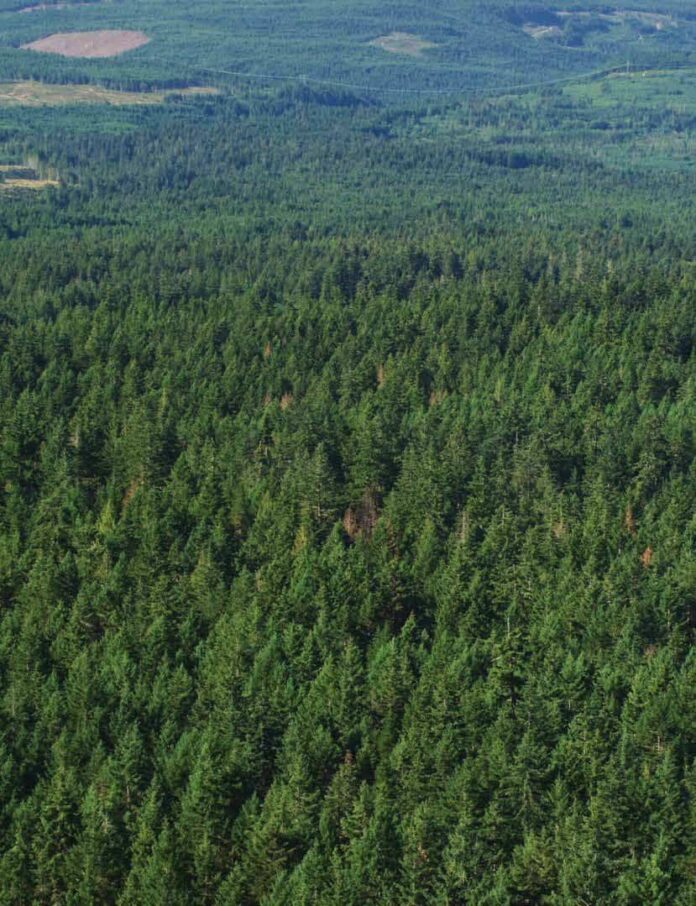

The province and ’Na̱mg̱is First Nation have signed an agreement aimed at supporting predictable harvesting and sustainable forestry in northern Vancouver Island’s TFL 37 area.
Under the joint decision-making agreement, the province and the First Nation will work together to ensure transparency and build consensus on where and how harvesting activities will occur, officials said. The pact also reflects implementation of the United Nations Declaration on the Rights of Indigenous Peoples.
“The shared decision-making agreement recognises our right to make forestry management decisions in our territory, an important incremental recognition of our jurisdiction that fosters reconciliation,” ’Na̱mg̱is First Nation chief Victor Isaac said. “The agreement implements the United Nations Declaration on the Rights of Indigenous Peoples by ensuring processes for obtaining our free, prior and informed consent for [Forest Landscape Plans] and [Forest Operations Plans]. Our consent will ensure that ’Na̱mg̱is forest values will be central to stewardship.”
The agreement focuses on Tree Farm Licence 37 near Woss and Port McNeill, territory where Western Forest Products holds the licence. A draft of the agreement was completed in October and neighbouring communities, industry and stakeholders were invited to provide input between Oct. 3 and Nov. 2.
Western Forest Products and ’Na̱mg̱is First Nation previously collaborated on a draft Forest Landscape Plan and Forest Operations Plan covering most of TFL 37 and submitted those plans under a pilot project in 2025.
“Completing this agreement marks a major step forward in building a modern, collaborative planning approach for northern Vancouver Island firmly rooted in partnership with ’Na̱mg̱is,” said Steven Hofer, president and CEO of Western Forest Products Inc. “Guided by transparency and ongoing engagement, this agreement enables timely approval and implementation of the Forest Landscape Plan and Forest Operations Plan for TFL 37 and moves toward what our sector needs to support reduced costs, strengthen economic resilience and deliver lasting benefits for communities as we navigate challenging times.”